
Bypassing censorship
Creative strategies to get your message heard despite bans.
Across the globe, governments are increasingly using censorship, online and offline, to control political dissent and civil disobedience, especially when it comes to LGBTI rights. In these hostile contexts, where speaking out can lead to surveillance, violence, or criminalisation, standard forms of protest can be ineffective. But even under the heaviest of restrictions, people will always find ways to connect, resist and radically dream. Lower-profile tactics can provide a safer way to make a stand, minimising risk while maximising message visibility.
Tacticts to explore
Project your Protest
Make your presence known with projected slogans and visuals onto buildings at night. This tactic lets you creatively claim public space, bypass protest restrictions, and amplify your presence boldly. Pick a place that’s strategic to your goal: where will your message hit hardest or challenge power most directly? Government buildings, corporate HQs, and historical landmarks are just some of the ideas to consider.
Get inspired
In Korea, Amnesty International organized a “ghost protest”, projecting holographic images of more than 120 participants calling for freedom of expression and peaceful assembly after authorities repeatedly denied permits and imposed restrictions on protests.
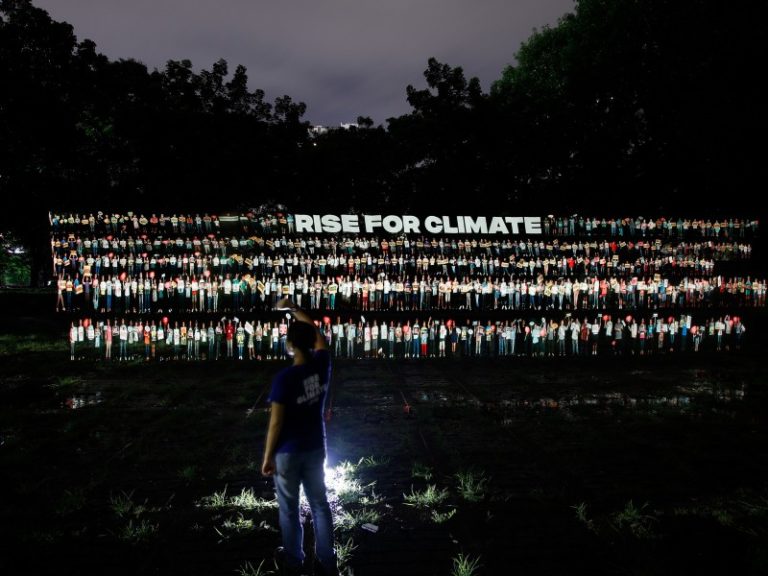
In the Philippines, climate activists held a hologram virtual march, projecting images of over 500 frontline community members, students, artists, and advocates onto the Bantayog ng mga Bayani Memorial to demand a swift and equitable shift to 100% renewable energy, ahead of the Global Climate Action Summit.
In San Francisco, environmental activists have also used animated projections to create a great emotional effect, bringing buildings to life. A great way to attract attention. In total safety.
Protest with Everyday Objects
Using everyday objects as a symbol of protest can effectively cut through the noise. Think of symbols, sayings, images and references that people will instantly understand in your context to make injustices harder to ignore. Repurposing ordinary items and using everyday spaces and objects can create solidarity that bypasses censored language.
Get inspired
When Pride was abruptly shut down in Shanghai, activists filled their apartment’s clotheslines with rainbow-coloured items “hiding” a powerful message in plain sight.

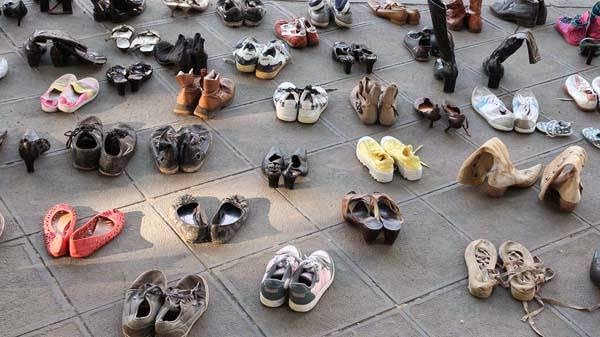
After an IDAHOBIT rally was violently shut down the year before, activists placed 100 empty shoes at a popular square in Tbilisi, Georgia. The shoes stood in place of those who refused to be erased and silenced, staging a protest while preventing exposure to public violence.
“Guerrilla” Activism
Guerrilla activism consists of quick, low-cost actions often carried out anonymously across multiple locations. It requires minimal organisation but is relentless in frequency, setting it apart from traditional protests and offering greater safety for activists. From putting gender-neutral stickers in venues with only binary toilets to planting flowers, guerrilla activism disrupts the status quo and reclaims visibility in public spaces. Even if people can’t see you, your action can still tell a meaningful story. Think about showing three things: what needs to change, why it matters now, and why people should care. Focus on feelings that others can relate to and let the action speak for itself.
Get inspired
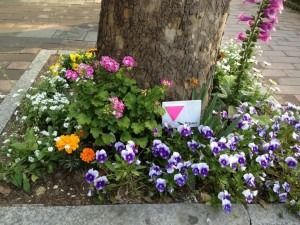
On IDAHOBIT, people around the globe planted pansies – a word once used as a slur to refer to gay men – and reclaimed it as a symbol of pride and resilience. Flowers were planted in places where violence happened, to honour victims, and to show that the LGBTI+ community is still here and fighting back.
“The Gluers” have been putting up posters around Paris and other parts of France since 2019 to raise awareness and denounce violence against women. Their original memorial for 122 women killed by partners was removed after three weeks, but they continue to reclaim space with ongoing actions.
Create new code words
Invent new terms, metaphors, or coded language to bypass censorship rules. This requires clear guidance to your audience on using new terminology consistently in events and communications, but it is an effective way to overcome the challenges of banned words.
Get inspired
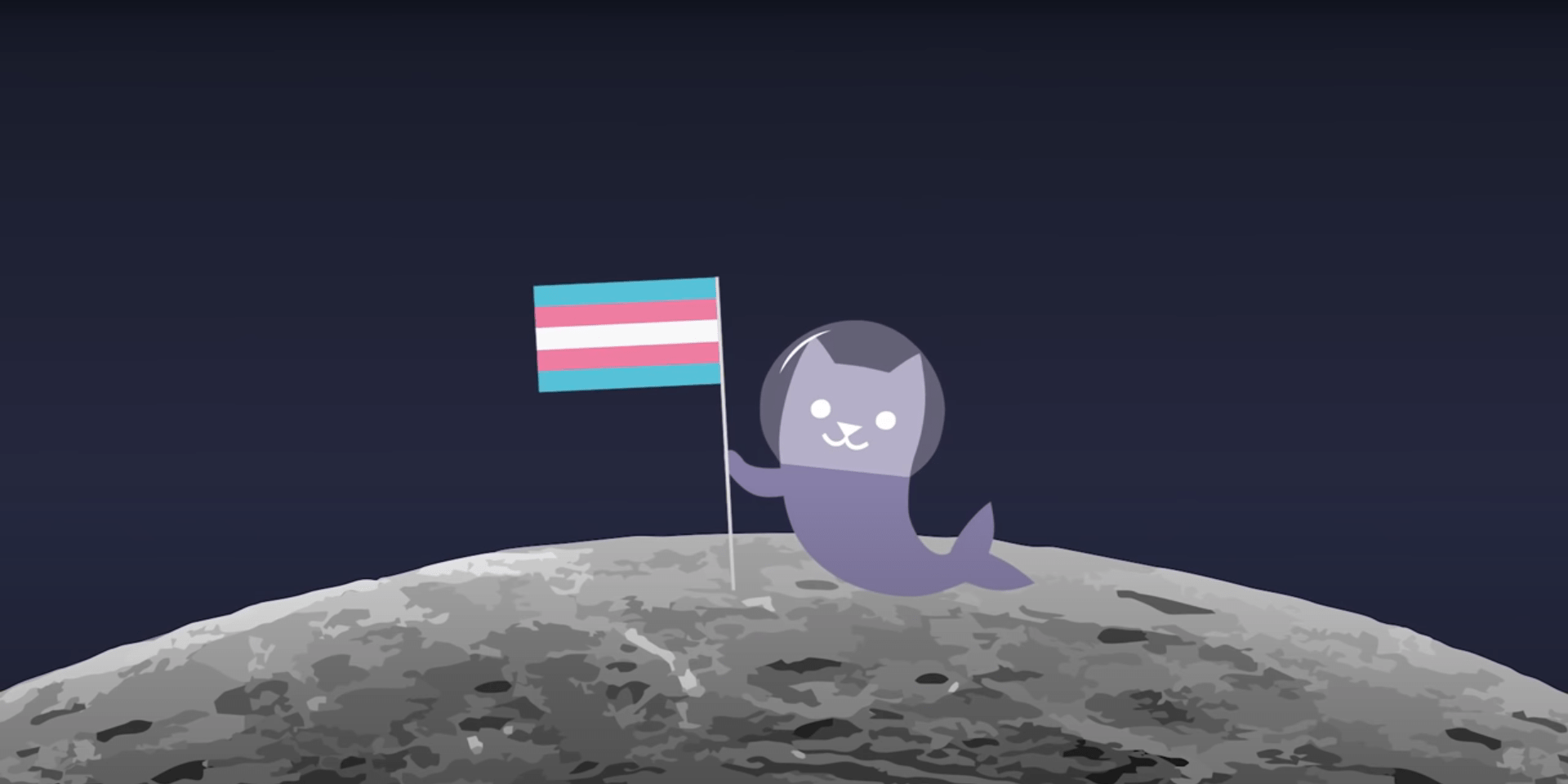
In Russia, a trans group created a new, playful term —“kilkot”— to talk about trans people. Derived from the Russian words for fish and cat, a kilkot is a half-fish, half-cat chimaera representing non-binary identity. After adopting this terminology, new accounts were set up that avoided explicitly banned words, allowing the community to continue connecting safely online.
Speak up, without words
You also don’t have to use any words to make a point. Sometimes silence makes the strongest statement. The “No Words” campaign is an excellent example of how you can smartly turn the opponents’ logic against them in this way, using censorship legislation as an opportunity for becoming more visible.

Hide in Plain Sight
Hide your messages inside music, art, and fashion to escape the scrutiny. You can also share content on alternative platforms, such as streaming services, gaming platforms, or encrypted messaging apps, to reach people beyond bans. These five independent journalists collaborated with a musical director and turned ten censored articles into pop songs. Uploading them to streaming platforms, the public was invited to share the “Uncensored Playlist” under #truthfindsaway, so that information could slip back into places where it had been suppressed.
Put this strategy into action
Don’t forget the risks
Don’t forget to consider risks! Subtlety in your actions doesn’t mean safety is guaranteed. Ask yourself whether any part of the action might expose individuals, and consider any risks that you might encounter along the way. Think about what might trigger a backlash, what you can control, and what protection you might need.
Know where the real red lines are
Censorship is often inconsistently enforced. Take time to understand what is explicitly banned, what exists in legal grey zones, and what is enforced selectively. This helps you decide when to adapt and when to push.
Plan for escalation and de-escalation
Design actions that can scale up or down depending on the response from authorities, platforms, or opponents. Being able to pause, shift, or reappear elsewhere is part of a long-term strategy.
Think in systems, not single actions
Bypassing censorship works best when actions are connected rather than isolated. Consider how messages and actions can reinforce each other over time instead of relying on one moment to carry everything. Give people opportunities to support and stay engaged over a longer period of time, from sharing the message, to joining online, to starting their own versions. A one-off can make a splash, but ongoing engagement builds real power.
Avoid unintended exclusion
Coded communication can strengthen in-group solidarity but also risk leaving some people behind. Regularly check your messages for accessibility and make sure your messages are not too cryptic. You want to plan carefully how to move your audience to a new language, or accounts or platforms.
Document carefully, or not at all
Not every action needs to be recorded or shared. Be intentional about what is documented, how it circulates, and what traces it leaves behind. In some contexts, the absence of evidence is part of the strategy.


