Re:Imagining change
Notes from a book by Storybasedstrategy.org
Human beings make sense of the world through stories. The narratives we as individuals construct about our lives — based on our experiences — tell us who we are, where we came from, and how we came to be this way.
Just as our bodies are made of blood and flesh, our identities are made of narratives
The myths societies produce tell us who we are collectively, how we should relate to one another, and what constraints and possibilities we face. Just as we see faces in all kinds of unexpected places, we see stories everywhere. And numerous industries in our modern world are dedicated to story production: from movies, theater, and television, to advertising, journalism, motivational speaking, and political campaigning.
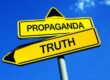
Just as stories can aid understanding, they can also inhibit it. Just as they can open our eyes, they can blind us. So stories are inextricably linked to power. They make up what John Gaventa (1980) calls the “third dimension” of power — the power to create meaning, to shape what can be thought about and what is inconceivable. Some stories are told so often that they become “common sense” or “the way things are.” Such stories, or dominant narratives, maintain the current power structure and imply that it is “natural” or “right.” But these stories are constantly being contested by counter narratives, alternative stories that challenge these common-sense notions of truth.
So indeed, in order to make systemic social changes, change agents must understand the way contemporary social systems shape culture and ways of collectively making meaning.
This comprehension is the objective of Narrative power analysis.
Narrative power analysis starts with the recognition that the currency of story is not necessarily truth but meaning.
In other words, what we perceive as “true” is actually created through a mix of cues and filters that define meaning.
Understanding the various elements of the mix is essential for any effective deconstruction tactic.
Narrative power analysis aims to identify how the dominant discourse is constructed, how the stereotypes are built, how facts are used to underpin the narrative, how the dominant discourse is being disseminated, what filters we apply when we hear the discourse etc.
Filters play a very specific and strong role. As a matter of fact, people have existing stories about their world that may act as narrative filters to prevent them from hearing social change messages. As years of psychological studies have shown, people are conditioned to ignore information that doesn’t fit into their existing framework for understanding the world (often cold “confirmation bias”).
A narrative power analysis is designed to expose potential obstacles for a social change message connecting with an audience. Since an audience’s existing stories will filter new facts or information, change agents need to offer a new story. Every social change effort is inherently a conflict between the status quo and the change agents to control the framing of an issue. This contest is the battle of the story.[1]
Building the awareness of how the dominant narrative is constructed also prepares social change agents to construct counter narratives
Five elements of story are particularly relevant for both analyzing and effectively communicating stories: conflict, characters, imagery, foreshadowing and assumptions. Story based strategy is a method for framing issues and designing campaigns. The five elements of story provide the scaffolding to construct a frame by offering a framework for what goes inside the frame.
[box] Without conflict, there is no story. Conflict is the backbone of every narrative.
[box] Good stories have characters to which people can relate. Messengers are just as important if not more important then the message itself.
[box] An image speaks more than 1000 words. A basic principle of social change communication is “Show, don’t tell”. When the story is showing instead of telling it offers the audience the opportunity to use their own values to draw conclusions.
[box] Foreshadowing refers to the ways a story offers hints to its outcomes. Stories have to offer a vision of how they will shape the future. « And they lived happily ever after » is the epiphany of foreshadowing.
[box] Assumptions are the unstated part of the story that you have to accept in order to believe the narrative is true. Assumptions are all the underlying elements of a story, the hidden part of the iceberg. Arguably, the most difficult and important part to analyze.nt goes here
Once you understand how stories are shaping our understanding of the world, and which stories we are told, you can start build your story-based strategies for change.
Crafting a successful story based strategy requires analysing and understanding the power of storytelling to structure information in a way that convinces people who are not already actively supporting the cause. Every social change effort is inherently a conflict between the status Quo and the change agents to control of framing of an issue. This is the Battle of the story. The battle of the story is the larger struggle to determine whose stories are told, how they are framed, how widely the stories are heard, and how they impact dominant discourse.
[1] On this see also the seminal “winning the story wars” by Jonah Sachs