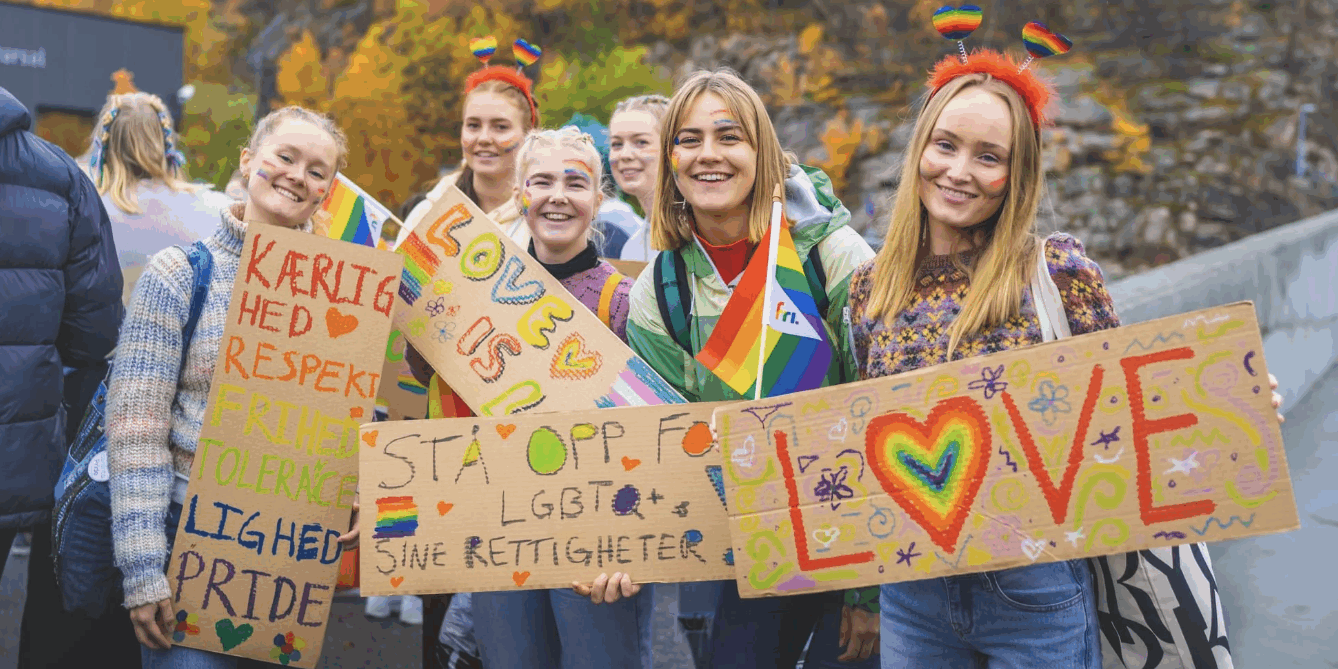
It’s mid-September, and Kirkenes – a small town in the north of Norway – is busy with preparations for its annual Barents Pride festival, a unique cross-border event that could turn out to be inspirational for many people.

The idea for Barents Pride emerged in response to oppressive laws in Russia targeting LGBTQ+ individuals, particularly the 2013 anti-propaganda law and earlier foreign agent laws. These measures weaponised the LGBTQ+ community, spurring Norwegian and Russian activists to act. We talked to Patricia from Amnesty Norway, one of the organisers on the Norwegian side, and to activists from Russia who had to stay anonymous for security reasons.
Rooted in History
The initial concept was to alternate Pride events between Kirkenes (Norway) and Murmansk (Russia), but the reaction on the Russian side was too violent and included arson attacks on the organisations. A joint event on the Norwegian side was therefore identified as the safest option for Russian activists to enjoy Pride festivities, share their unique experience and connect with Norwegian media and decision-makers.
Given the historical and cultural ties between the Barents region of Norway and Russia—including shared borders and long-standing interaction—the region was seen as the perfect location for a joint Pride event.
In particular, Kirkenes’ strong local support stems from its historical ties with Russia. During World War II, the region endured hardships, with the Russian army liberating Kirkenes after scorched-earth tactics by retreating German forces. These shared experiences fostered a sense of connectedness, which extends to present-day cooperation and solidarity. Street signs in both Norwegian and Russian symbolize this bond. Local residents’ awareness of Russia’s authoritarian developments has strengthened their resolve to support LGBTQ+ activism across the border.

From grassroots to global advocacy
The first Barents Pride took place in Kirkenes in 2018. The event featured debates, film screenings, parades, and celebrations. Local community involvement was integral from the start, with strong support from local authorities, police, and businesses. For example, schools contributed by baking cupcakes and making candy floss for the gathering.
Initially, only people living in the Barents region would participate but from 2022 onwards the event would see participation from Russian activists from all over Russia, and even from Russians in exile. Barents Pride now also involves multiple international organizations. While its initial focus was on grassroots support, creating a meeting place for Russian and Norwegian activists, enabling them to strategise, build networks, and experience solidarity, recent years have highlighted the need for international advocacy. Norwegian organisations have called on their authorities to exempt human rights defenders from sanctions against Russia, arguing that Norway must honour its commitments to supporting internal resistance.
Barents Pride today plays a crucial role in presenting Russian civil society to the world, and evidencing the difference between the Russian society and those in power.
Security and Participation
Participation dynamics have shifted over time due to safety concerns. In early years, some participants wore masks and held “no photo” signs to protect their identities. As the event gained recognition, fewer participants opted for masks. However, since 2022 masks have returned due to heightened risks for Russian activists, reflecting the evolving security context. Organisers are well aware of this and have introduced as many safety measures as possible, while being very honest that total safety can never be guaranteed.

Gender Disparities in Participation
There is a significant difference in the ability of men and women to participate in Barents Pride. Women often face greater obstacles in attending due to societal expectations and family obligations as many need to care for relatives, particularly mothers. The more difficult the conditions are, the more women are at risk and the less they are ready to take the risk of visibility and participation in such events.
In contrast, men tend to have more freedom to travel and participate, leading to an imbalance in visibility and representation at Barents Pride. Addressing this disparity remains a challenge, with organizers seeking ways to amplify the voices of women and non-binary individuals who face greater social and logistical barriers.

Uncertain future
While the initial vision behind Barents Pride persists, security concerns have been growing, especially after the Oslo Pride terror attack in 2022 and the Russian full scale invasion of Ukraine that same year. International tensions in North-East Europe cast a dark shadow over the initiative. Still, Barents Pride stands as a symbol of solidarity and resilience in the face of adversity. It brings together communities across borders, promotes LGBTQ+ rights, and amplifies the voices of activists fighting for equality under oppressive regimes. Despite challenges, the event continues to inspire hope for a future where Pride parades can freely take place throughout Russia.
A few insights shared by organisers
- Even the craziest idea can become reality if you believe in it.
- A mistake can also become an experience that allows you to grow.
- Societal perceptions and political climates can shift rapidly, requiring adaptability.
- Fear and propaganda affect all societies, emphasising the need for understanding and resilience.
More information on the event’s website