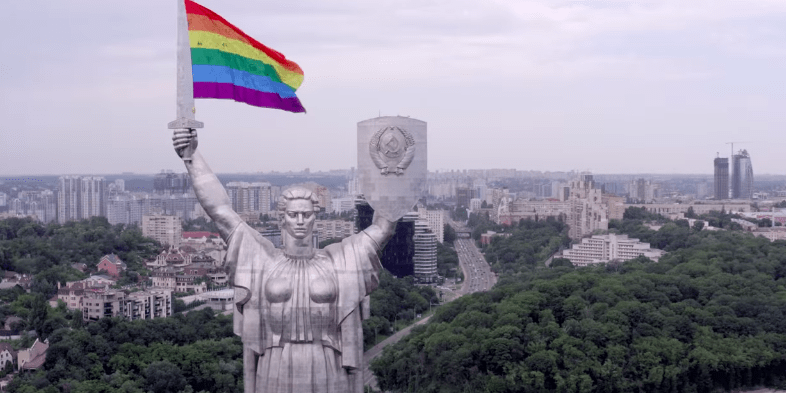
While COVID-19 kept many Pride 2020 events grounded online, Ukrainian activists proudly raised the country’s version of the Statue of Liberty to wave a rainbow flag over Kyiv, the capital. Activists also raised the LGBTQ+ symbol above the Motherland Monument, a Soviet-era war memorial in Kyiv.
They did so via a drone. A camera angle trick appeared to show the banner attached to the monument’s sword. The video was posted to Facebook with the hashtag that translates to “Mom will understand and support,” a reference to the statue’s symbolic status as the mother of the nation.
The stunt was pulled off by the organizers of Kiev Pride, whose annual march was canceled this year due to the pandemic. The celebration is routinely met with a counterprotest from far-right groups, although attendance and political support have grown in recent years. With 8,000 marchers, 2019’s event was the largest yet.
However, LGBTQ people still encounter significant societal prejudice and discrimination in Ukraine, which still does not legally recognize same-sex couples. A 2018 poll from Democratic Initiatives showed that 47 percent of Ukrainians believe LGBTQ+ rights should be limited; only 37.5 percent are against restrictions.
This stigma was reflected in the video’s comments, where Ukrainians complained about the “sinful vandalism”, even though the monument has no original religious connotation, but is a Soviet-era legacy. This link to the Soviet era was viewed critically by some LGBTQI+ commentators, who deemed it politically inappropriate.
The negative reactions from conservatives fuelled the fears of parts of the LGBTQI movement that backlash may outweigh the positive impacts of the action, as public opinion is far from generally supportive. Opponents quickly replicated the action, raising a Ukrainian flag with the inscription “traditional family,” similarly with a drone.
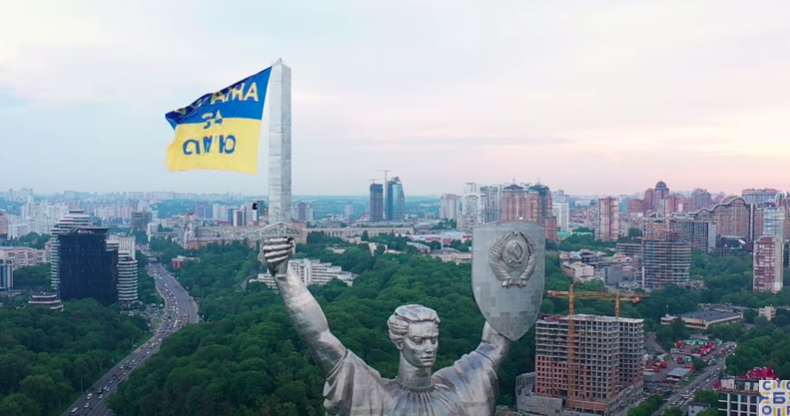
KyivPride reacted to this by posting a statement of support to all forms of families, including traditional, which again has some LGBTQI+ activists raise an eyebrow, fearing complacency in a time when anti-gender organisations are on the rise.
This initiative again underlines the delicate balance between visibility and the values associated with this visibility. In this case, the monument is associated with national pride (as the country’s most famous monument, family values (through the symbol of the Mother), authority, and tradition (reference to Soviet times). This couldn’t be more at odds with the values generally associated with Pride. Whether this discrepancy is mind-blowing or outrageous depends on the target group, and this initiative certainly generated both. Which one outweighs the other is left to be assessed.