Capturing people’s attention in our days of information overflow is every campaigner’s main struggle.
Previous articles talk about how to use provocative comparisons (in this case, weapons and dildos) or nudity to capture people’s imagination.
But it’s not always easy to know how far you can go, all the more as this will depend on your target audience, and your identity as an organization. Something that will be perceived as normal when done by Greenpeace is likely to be deemed provocative if done by WWF.
It is therefore essential to conduct regular tests on your target group’s perception of your organization or your community before you decide on a campaign action.
Provoking your audience
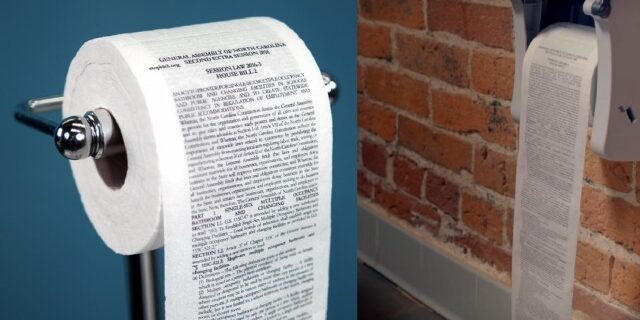
In 2016, ad agency McKinney in North Carolina printed the text of the anti-transgender bathroom law on toilet paper, flirting with the limits, which is what you have to do to capture attention.
McKinney is one of the hundreds of local businesses that came out against the law–and they’re showing their disapproval in a unique way.
Since the law is so concerned with what you do in the bathroom, it can now get a front-row seat, after McKinney commissioned a line of toilet rolls featuring the entire text of the law.
The agency explained. “We did this in support of Equality NC’s and Human Rights Campaign’s efforts to encourage North Carolina residents to petition their legislators at StopHB2.org.”
Craftivism
Craftivism is an approach to gentle campaigning, and it can be a great tactic to get your message out to a new audience or decision-maker in a creative way. According to craftivists, we can use the “slow, stitch-by-stitch nature of craft to help you consider the complexities of injustices,” as it will “lead to a deeper understanding of them and their solutions.”
Following this example, “Don’t blow it” can be sewn into handkerchiefs and given to those with the power to make an important decision. This tactic could complement your advocacy strategies and even help you build relationships with new allies for your campaign.

© Craftivist Collective
At the height of the COVID-19 pandemic, face masks were everywhere (and for good reason). This was an excellent opportunity for craftivists to use functional objects a tool for protest. While it is no longer obligatory, health authorities continue to advise people to wear face masks, which means this strategy is still relevant today.

© Craftivist Collective
Humor as protest
Humor always helps you convey a message, even if it is a serious one.
Greenpeace: Cats Vs BadTuna
In this video, humor and cute cats (with Instagram followers than many of us!) came together in a perfect entertaining combination that helped get a message through to a whole new audience. Cute animals are all over the internet and a short video montage of them is super shareable.
Parodying “Gathering Storm”
In 2009, American anti-LGBTIQ groups aired the “Gathering Storms” ad to oppose same-sex marriage. It quickly became one of the most parodied videos online, spawning several spoof videos on YouTube, such as the one below, which pokes fun on other conservative and right-wing talking points at the same time.
Queer visibility
LGBTIQ campaigns can employ these strategies to achieve two things: raise awareness about an issue and increase the visibility of LGBTIQ people themselves.
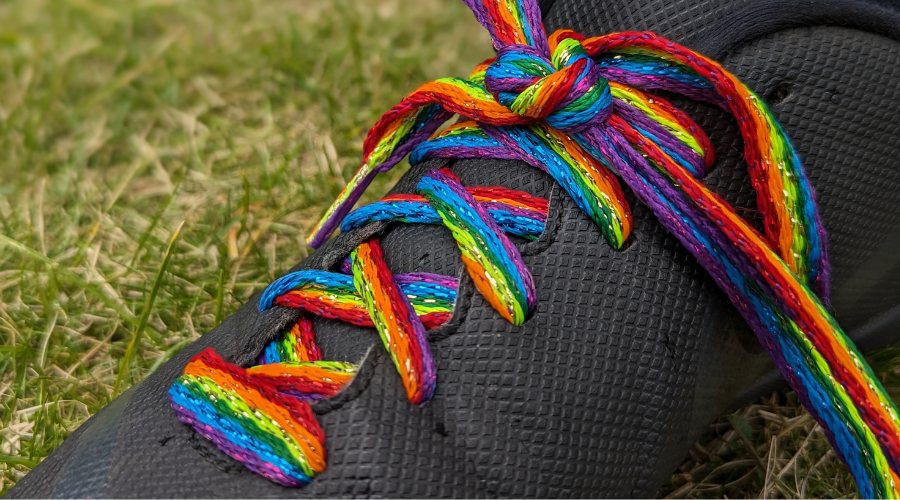
Stonewall: Rainbow Laces Campaign
© Stonewall
Since launching this campaign in 2013, over one million people “have laced up in support of LGBTQ+ inclusion in sport, fitness and physical activity.”
FELGBT: Hidden Flag
During the 2018 FIFA World Cup in Russia, six activists walked around in Moscow to form a secret rainbow flag in a country where LGBTIQ identities are criminalized.

© Hidden Flag
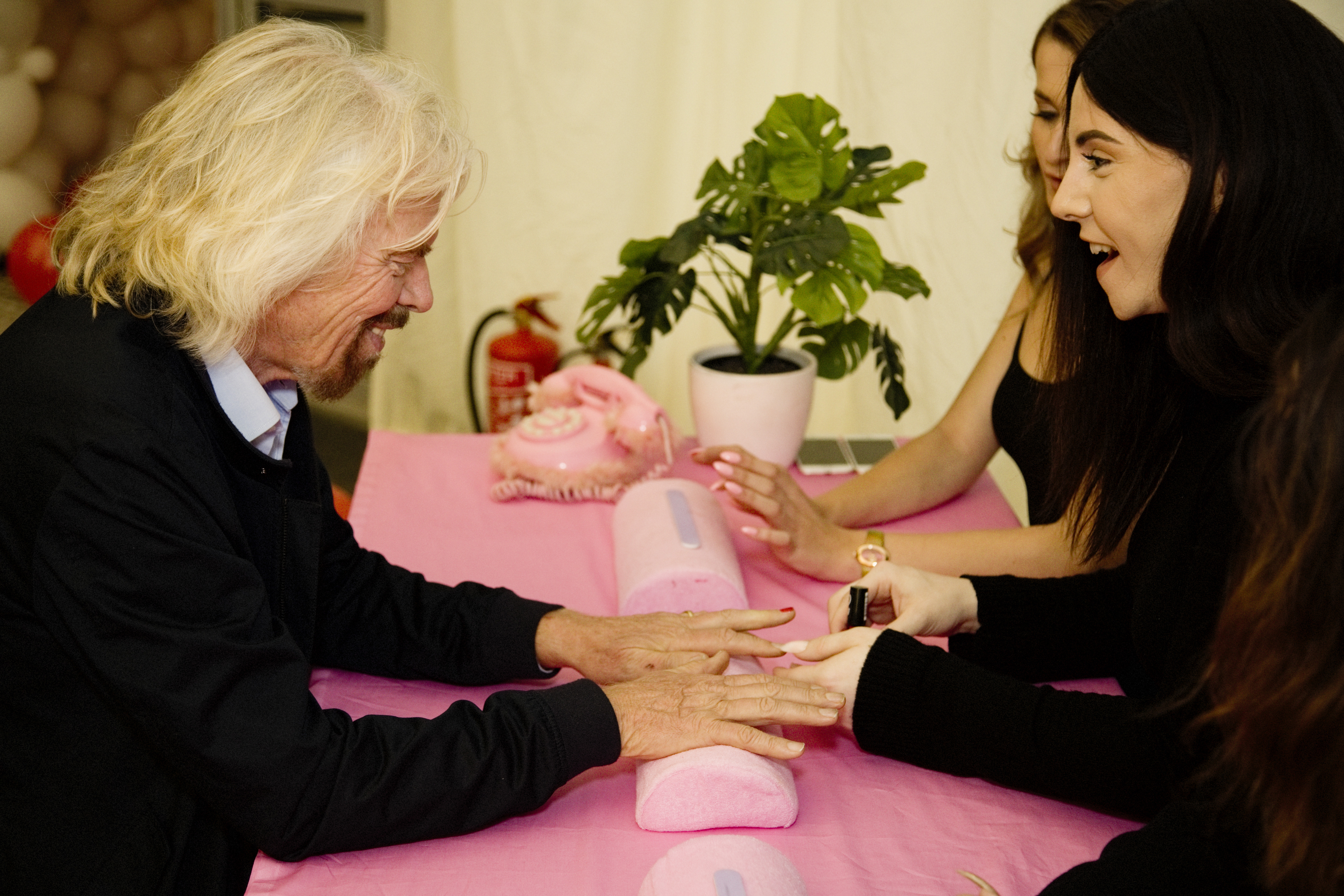
Nail Transphobia
This popular campaign was started by trans activist Charlie Craggs. They organize workshops where trans people offer free manicures to cisgender people to start conversations about trans inclusion.
© Charlie Craggs