How many times have we passed by walls on the street – or sat in a public toilet – and seen hateful messages about LGBT people? We are so used to them that almost nobody pays attention. But the hatred is still there, shouting at us through the streets of our own communities. Sure, graffiti is about expression, but what about our right to challenge that – to freely express our feelings, and to talk back about it?
After all, these messages threaten our integrity as human beings and reinforce the idea that LGBT people are fair targets for humiliation and attack!
Example from Uruguay
A group of activists from Uruguay, the Ovejas Negras (Black Sheep) collective, created a great project to challenge this. They invited people to send pictures of graffiti or writings against LGBT people that could be found on the street, in their workplace, or at school. Loads of people sent in images from their cameras or cellphones via social media.
The group then created a photo montage of them all (some are pictured above), and made a whole album here. They also used the contributions to produce a short video about homophobia, transphobia, and lesbophobia in Uruguay (released on May 17, 2013).
The video received over 10,000 views, and the group received loads of positive feedback from teachers, who found it a useful tool for opening up discussion about discrimination.
Here’s one of the posters they created to help get the word out:

Another great example from Egypt:
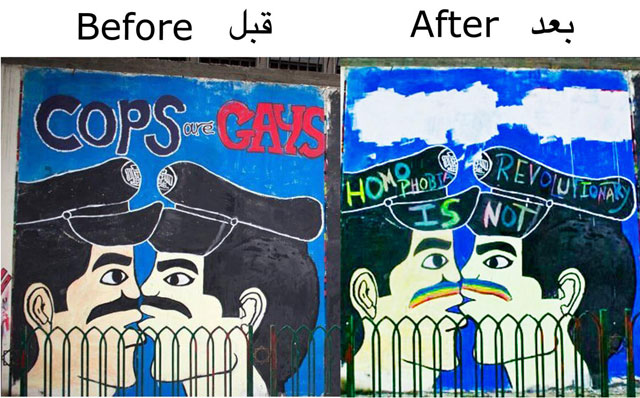
Pro-LGBT activists transformed “an anti-gay mural on Mohamed Mahmoud Street in Cairo, which took a swing at the city’s cops, calling them gay.
Activists altered the homophobic graffiti to promote a pro-gay message. A young Arab woman, Leil Zahra Mortada, later shared the before and after photos of the mural on Facebook, which triggered discussions on LGBT issues.
Social media
Even when not from walls, many other initiatives have sprouted everywhere to reclaim abusive language and slurs and turn them into something supportive. One of the most radical ideas is #LoveWins, a free browser add-on that deletes words like ‘faggot,’ ‘trannies,’ and ‘poofs’ and replaces them with positive, rainbow-coloured words.
UK-based artist Conor Collins even made waves around the Internet with his powerful reimagining of the iconic Caitlyn Jenner Vanity Fair cover, or a portrait of Olympic diver Tom Daley, made entirely out of homophobic and transphobic comments and death threats they received on social media.


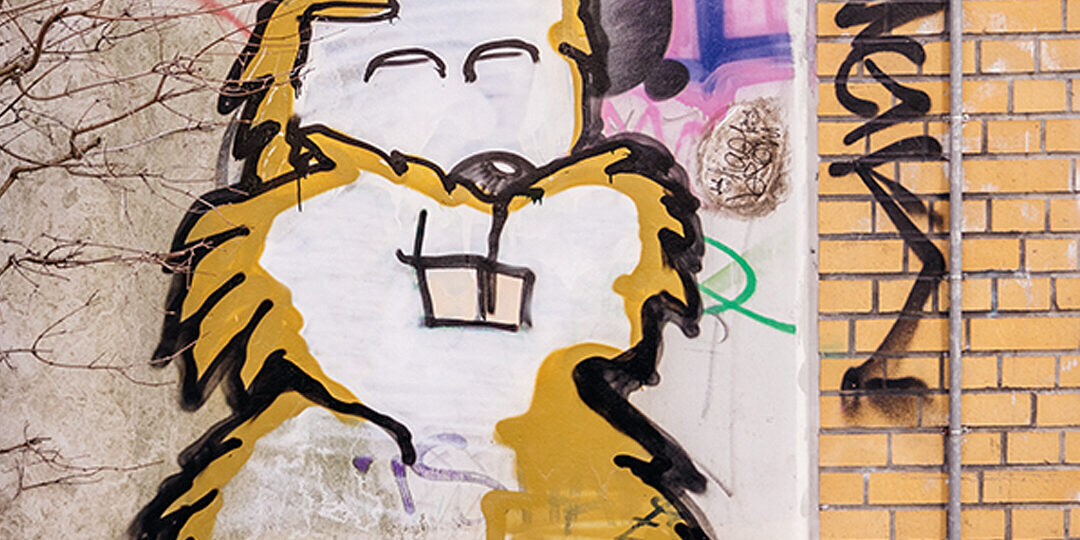
Another one from Berlin
Swastikas have become a canvas for more joyful and positive images with this guerrilla graffiti tactic. By turning a negative symbol into something completely different, the animosity and division that might have been fostered are changed into joy, sending an important message of inclusion while rejecting a message of hate.