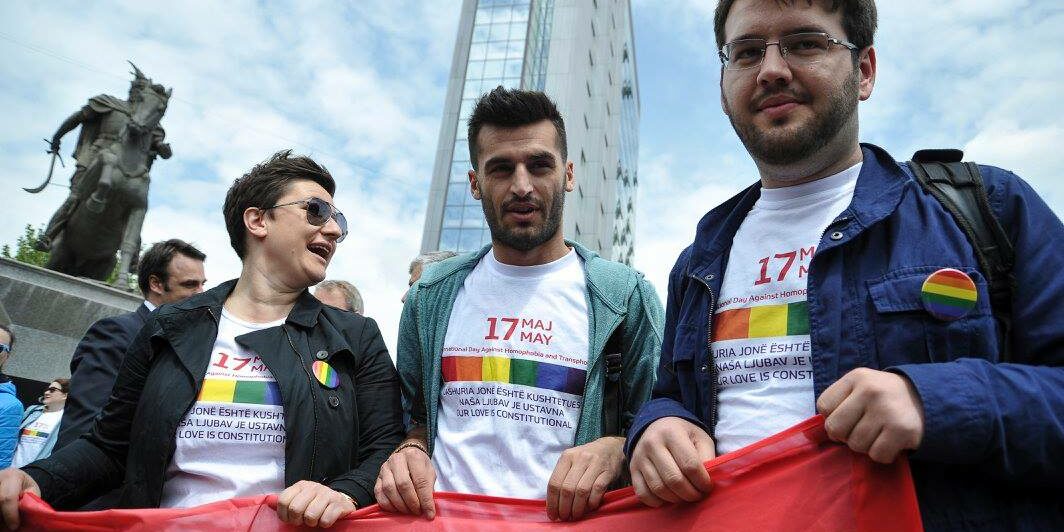
In the Balkan state of Kosovo, the President of the Republic himself, Hashim Thaci, participated in the IDAHOT march in 2016, one year before the first Pride march in the country (which he also attended).
Agim Margilaj from the Center for Social Group Development – CSGD, an LGBTI NGO, tells us more about how this happened.
Is holding a public march in Kosovo a “risky business”?
Kosovo is a very homophobic country. In a recent survey, only 3% of people said they would support their own children if they were LGBT. The community is very small, and most people won’t come out publicly. So, holding a march is indeed quite a challenge.
So, how was LGBT public campaigning in Kosovo before that historic IDAHOT march in May 2016? Did something that exciting happen before?
The coalition of LGBT organisations in the country (CSGD, CEL, and QESH) has been celebrating IDAHOT since 2014. The first year, we wanted to test the ground, so we organized a discreet event with 60 people, mainly international allies. As it worked well, we scaled up the year after with a larger event attended by 200 or so people, including national institutions. Each time, we were careful not to communicate with the media ahead of the events, so as not to generate counter-protests.
Elsewhere, there has been some public campaigning, such as street banners or a Facebook campaign, but nothing on a very large scale.

President Hashim Thaci marched for LGBT equality during IDAHOT 2015 behind activists carrying the rainbow flag. © CEL Kosovo
Was the IDAHOT 2016 event different in nature?
The previous actions had been essentially about visibility, without any clear political ask. It was mainly to “dance against homophobia.”
This time, we were determined to be more political and to include specific demands, in this case, the right to register same-sex partnerships. This right is, in theory, guaranteed by our 2008 Constitution, which explicitly lists sexual orientation as a ground on the basis of which discrimination is forbidden. Our current family law, therefore, breaches our Constitution.
So we decided to hold the IDAHOT march under the argument that “our love is constitutional,” and to demand access to the rights which the Constitution already grants us.

President Hashim Thaci with former EU Parliament Vice President Ulrike Lunacek. © CEL Kosovo
How did the preparations go?
We had early confirmation from the municipality that they would allow the march, and from the police that we would have protection.
We had trouble in previous years to get the authorization, but we complained so much that the city authorities are now much more supportive.
Two months ahead of the day, we started reaching out to institutions, allies, foreign supporters, etc.
We basically invited everybody to join, but we weren’t expecting more support than the year before, when only a handful of national bodies sent representation.
We got early confirmation of the support from foreign embassies and the EU. The US Embassy even hired a US band to play in the central city square at the end of the march.
Ulrike Lunacek, Kosovo rapporteur, Vice President of the EU Parliament, and co-chair of the EU Parliament Intergroup on LGBT rights, who was in the country for other purposes, very naturally decided to attend the march.
And on the day itself?
We had invited the president along with all the other national institutions, but he actually sent no information and literally just showed up!
When he was elected, he couldn’t even get the LGBT acronym right, but he obviously has a very highly capable staff, and he delivered convincing speeches against discrimination.
In any case, LGBT people are certainly not popular enough in the country for his action to be considered “pink-washing,” even though the EU accession process obviously constituted an essential motivation for his presence.
Interestingly, many institutions followed in his wake, with the ministers of justice and EU integration also being present, and with representations from the Prime Minister’s office, the Ombudsman, etc.
What was the public reaction like?
The march itself was peaceful. We had strong police protection, but it doesn’t look like there were threats planned.
The attendance of the President logically attracted a lot of media, and the march was covered in every single media outlet, almost minute by minute. The media attention was sustained over five or six days after the march, with many TV shows and top news features. Overall, there has been no negative coverage. At worst, the media kept a neutral tone.
There hasn’t been much direct reaction from the general public, neither negative nor positive. But we definitely received many more contacts from LGBT people, especially from remote parts of the country, who reported hate speech and other incidents. These are people who might not have known that we existed before we got this extensive media coverage.

Former president Atifete Jahjaga also joined the march. © CEL Kosovo
And now?
The success of this action is encouraging us to continue in this direction.
Presidents in other LGBT marches
In other parts of the world, Pride and IDAHOT marches have also been graced with the presence of presidents and prime ministers.
Serbia (2017): The first openly gay prime minister attended the 2017 Pride march in Belgrade—a first in the country.
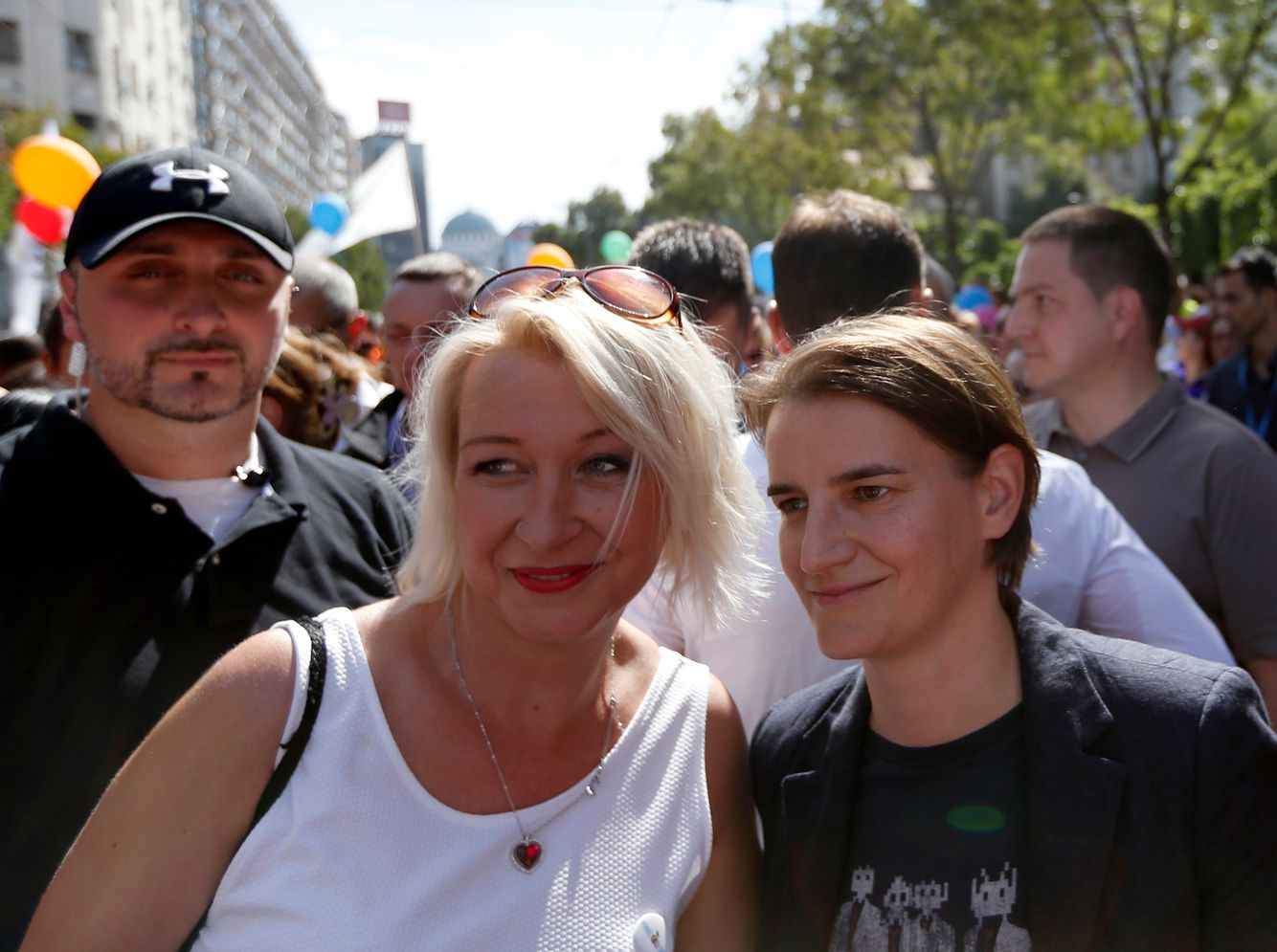
© AP Photo/Darko Vojinovic
Taiwan (2023): Then-Vice President Lai Ching-te joined 180,000 people in Taipei Pride, becoming the highest-ranking official to do so. He became president in 2024.
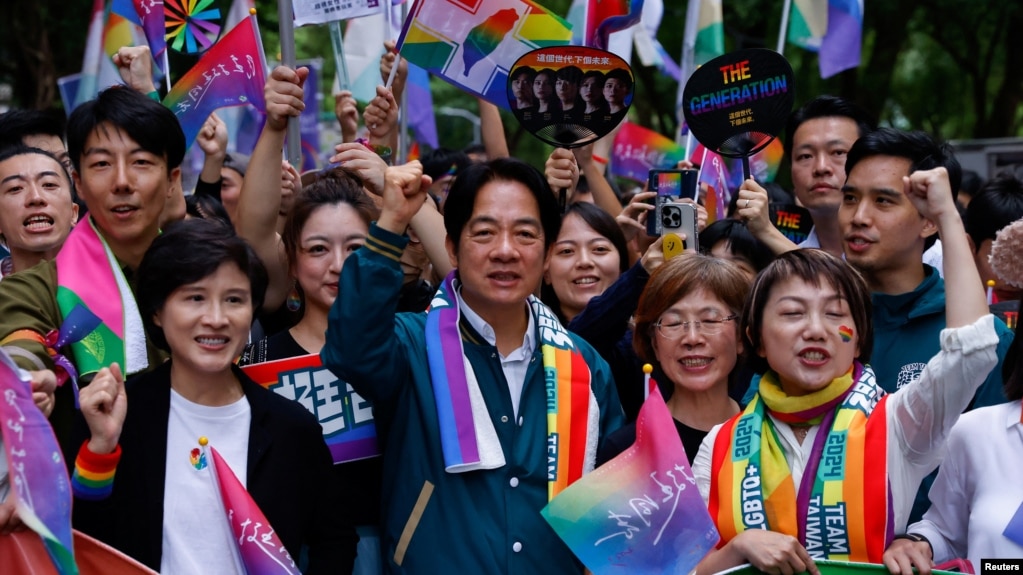
© Reuters
Thailand (2024): Prime Minister Srettha Thavisin became the first prime minister to join Bangkok Pride Parade, the biggest in Asia.

© Matt Hunt—Getty Images
Argentina (2021): President Alberto Fernandez became one of the first sitting presidents in Latin America to join Pride. He later said he is proud of his child, who is a popular drag artist in the country.
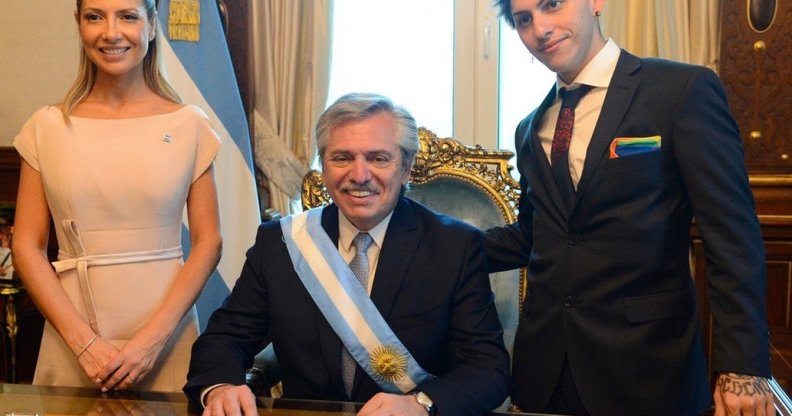
While there is no photo of the president in the Pride parade, here he is with his child, drag queen Estanislao Fernández, who is rocking a rainbow flag in his inauguration. © PinkNews
Cayman Islands (2021): Prime Minister Wayne Panton joined the country’s first Pride Parade, marking a significant milestone in the Carribean country, which legalized same-sex partnerships the year before.
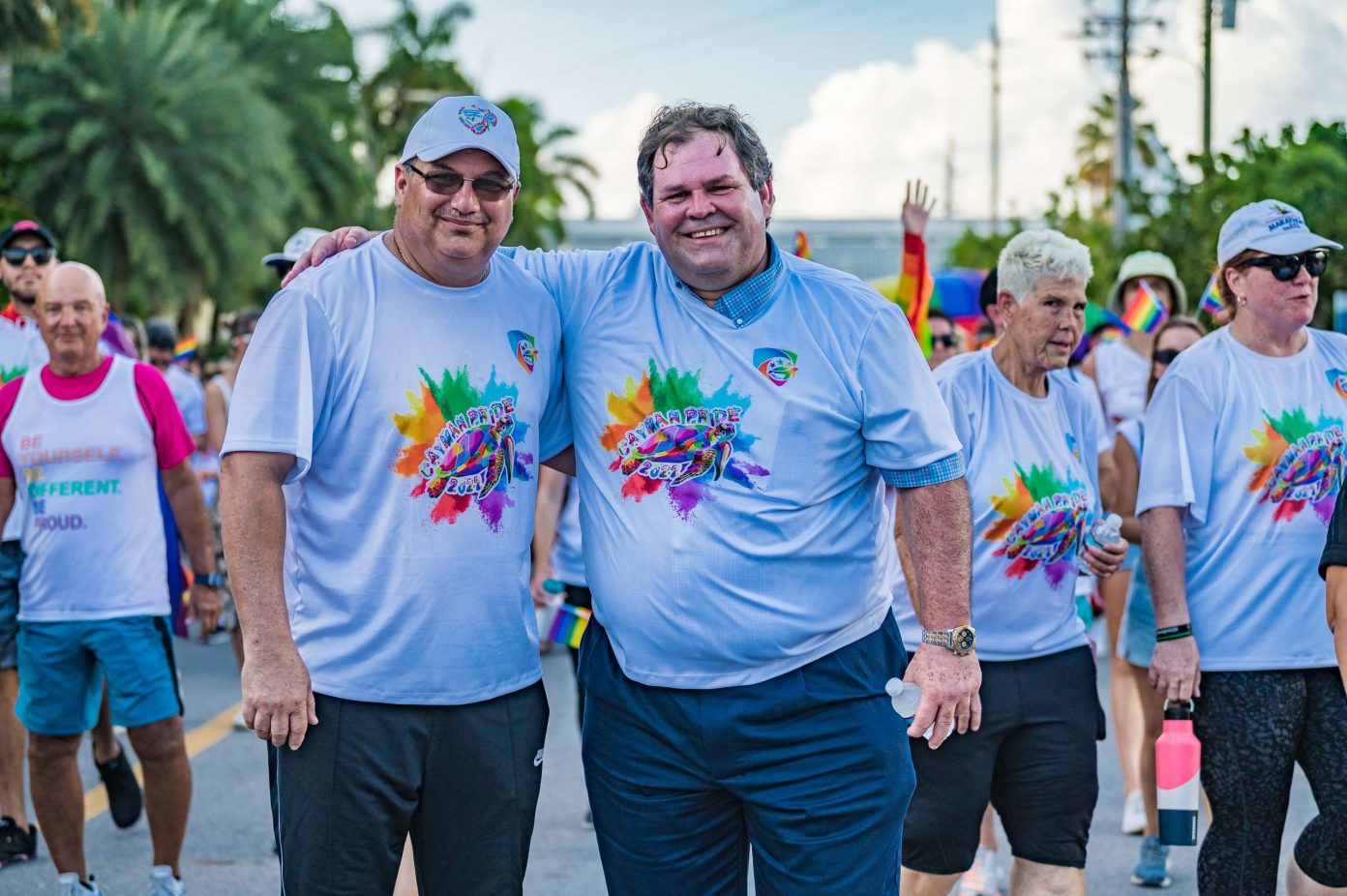
© Cayman Compass
United States of America (2021): Vice President Kamala Harris made history when she became the first sitting vice president to join Pride, marching with Second Gentleman Doug Emhoff at Capital Pride in 2021.

© Getty Images