A centuries-old traditional festival provides an unusual, yet perfect, backdrop for the fight for LGBTI emancipation.
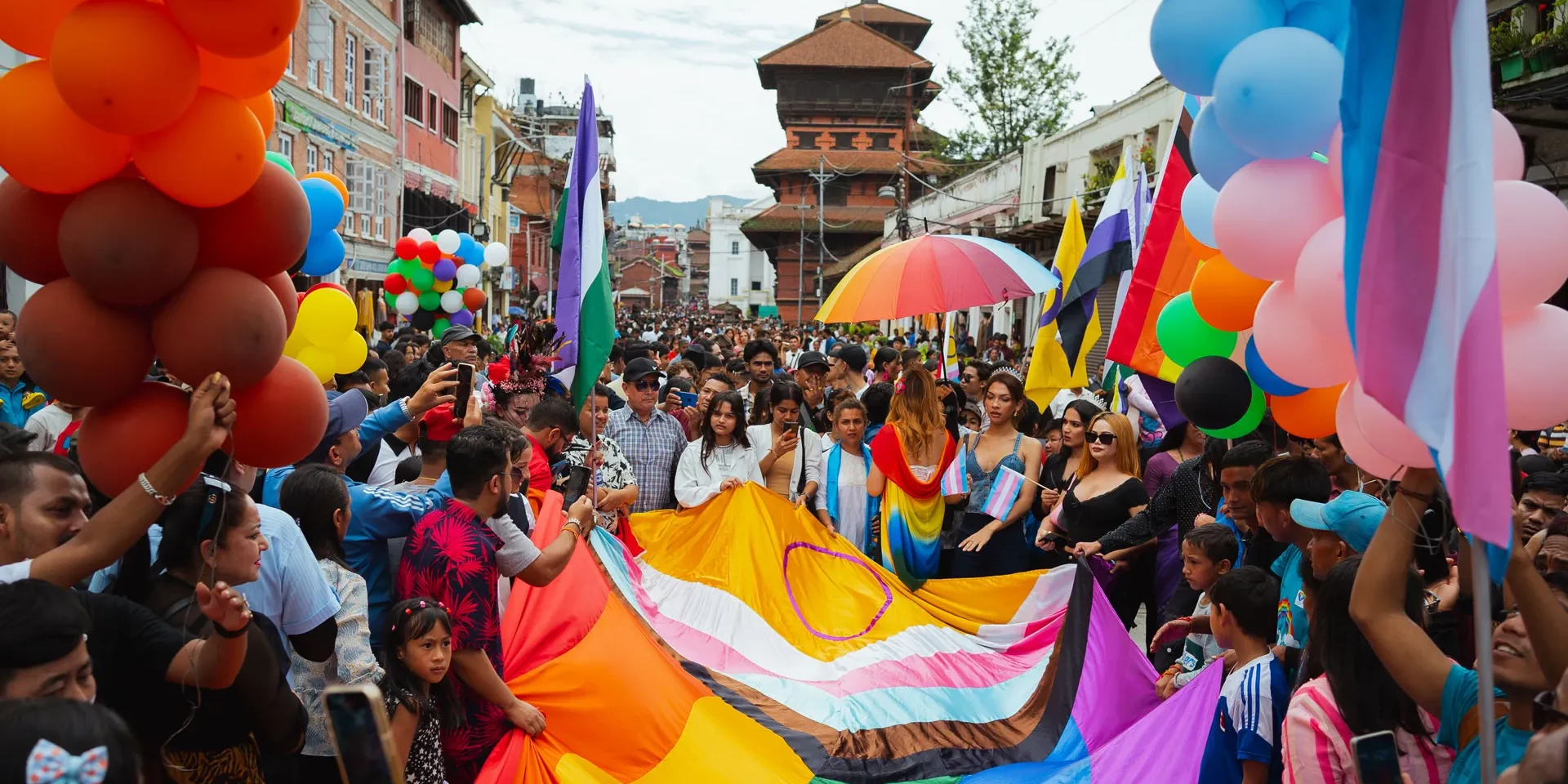
The festival of Gai Jatra is one of the oldest and most unusual of the many festivals celebrated by the Hindus and Buddhists of Kathmandu Valley. Some say that the custom goes back more than a millennium to the time of the Licchari Kings. Falling on the day after the full moon of August, Gai Jatra is a day to remember those who have died in the past year. Practitioners pray for their departed loved ones and commemorate them in grand processions that wind their way through the streets of the ancient towns of Nepal. Despite its associations with the dead, the festival procession is not a sad or solemn event. In fact, there is a lot of joy connected to it.
Many of the participants wear outlandish costumes. Traditionally, a good number of the young men in the processions dress in women’s clothing. Over the centuries, the festival has developed a second purpose. When political expression of any kind was outlawed, Gai Jatra became a time when ordinary citizens could vent their frustrations through political and social satire without fear of reprisal from the rulers.
With this rich history, Gai Jatra was a ready-made occasion for Blue Diamond Society (BDS), the leading LGBTI group in the country, to stage Nepal’s pride march.

This annual festival has become one of BDS’s primary events, drawing crowds of local supporters as well as tourists to join in on the fun and enjoyment of the festivities. BDS has been celebrating this unique festival for the last ten years. It traditionally involves a candlelight memorial in memory of LGBTI people and activists who had died in the past year. It also pays tribute to other victims in the country, for example, victims of natural disasters, like the terrible earthquake that devastated the country in 2015.
Embedding the fight for the rights of LGBTI people in a wider traditional ceremony enables the mobilization to thrive outside big cities, where the acceptance of diversity is habitually higher. BDS has taken the festivities to smaller towns in the country, like Pokhara, with immense success.

This case study is best presented in an animated video:
Chinese New Year can become challenging for queer people, as it would require them to be with unaccepting family members or deal with traditional practices reserved for married couples. In Singapore, Proud Spaces is trying to make this celebration an LGBTI-inclusive one through an inclusive community event, a “public space for the LGBTQ+ community to still celebrate the New Year in a traditional way.” As the founder told TIME, “We want people to come with their chosen family. We want people to come and make new friends, and maybe they will become chosen family. It’s just having that alternative for queer people.”

© Mike Kemp—In Pictures/Getty Images
In this Southeast Asian nation, LGBTI activists are reclaiming a narrative: the country is traditionally queer-inclusive. The onslaught of Western colonization demonized accepted forms of gender and sexual diversity in the country and imposed homophobic Christian norms on the population. Queer people have found a symbol in the babaylan, the female priestess powerful in pre-colonial societies, a role that was sometimes taken by persons assigned male at birth, who then had to live as women. LGBTI organizations like UP Babaylan, Babaylanes, PNU Katalonan, or UP Mentefuwaley have embraced this narrative by using pre-colonial or indigenous terms as their names, and organizing awareness-raising and community events around these themes.

© UP Babaylan
In 2006, the only temple devoted to the Taoist rabbit god Tu’er Shen opened in Taiwan. “Rabbit” has been a derogatory term for gay people throughout Chinese history, but it is being reclaimed by queer people, who have embraced the rabbit god as their spiritual guardian. This small temple has become popular as a safe space serving LGBTI people, but it is also a temple for “all people, especially those who wish to pray for love, friendship, and academic success.” In a trailblazing Asian country for LGBTI equality, these mixed spaces offer an opportunity for community dialogues, reinforcing the idea that LGBTI people have a place in society.
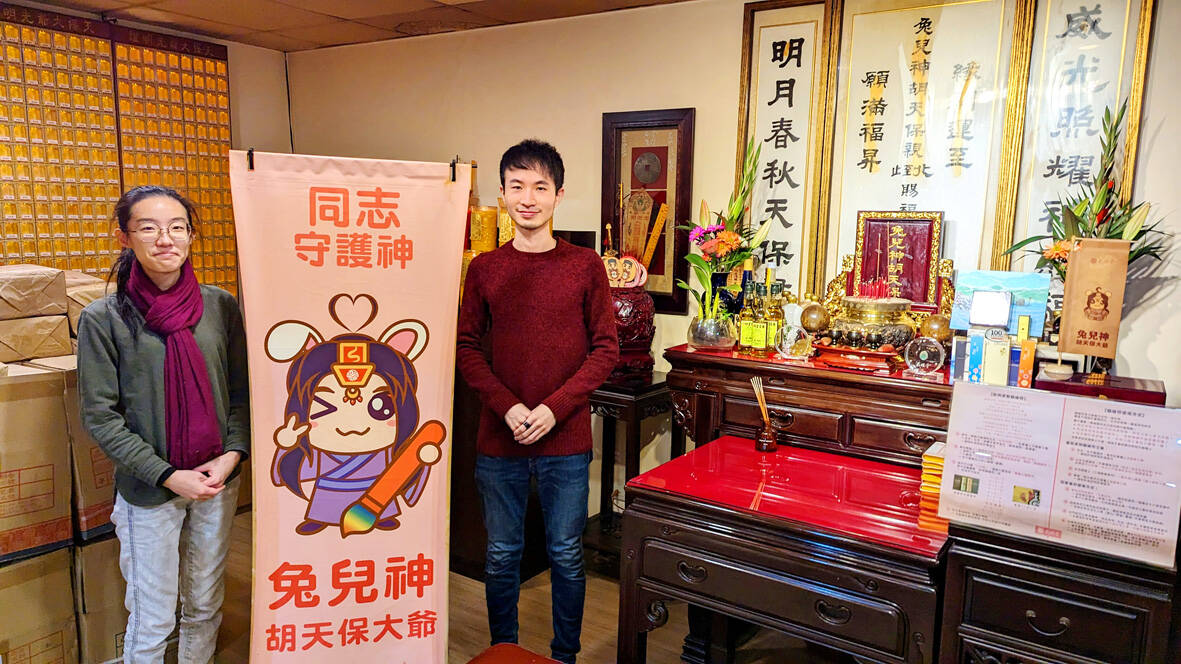
© Han Cheung, Taipei Times
Colombia: Barranquilla Carnival
Every February, the city of Barranquilla celebrates one of the most important celebrations in the country and one of the biggest in the world. This festival has also become a space for LGBTI people to be proud and visible. The carnival schedule includes a Gay Guacherna, a night parade that features LGBTI people dressing in extravagant costumes and competing in pageants attended by people of all ages. Designed by the district as a form of intangible cultural heritage, this festival is the perfect platform to assert that LGBTI people are inseparable from the community.
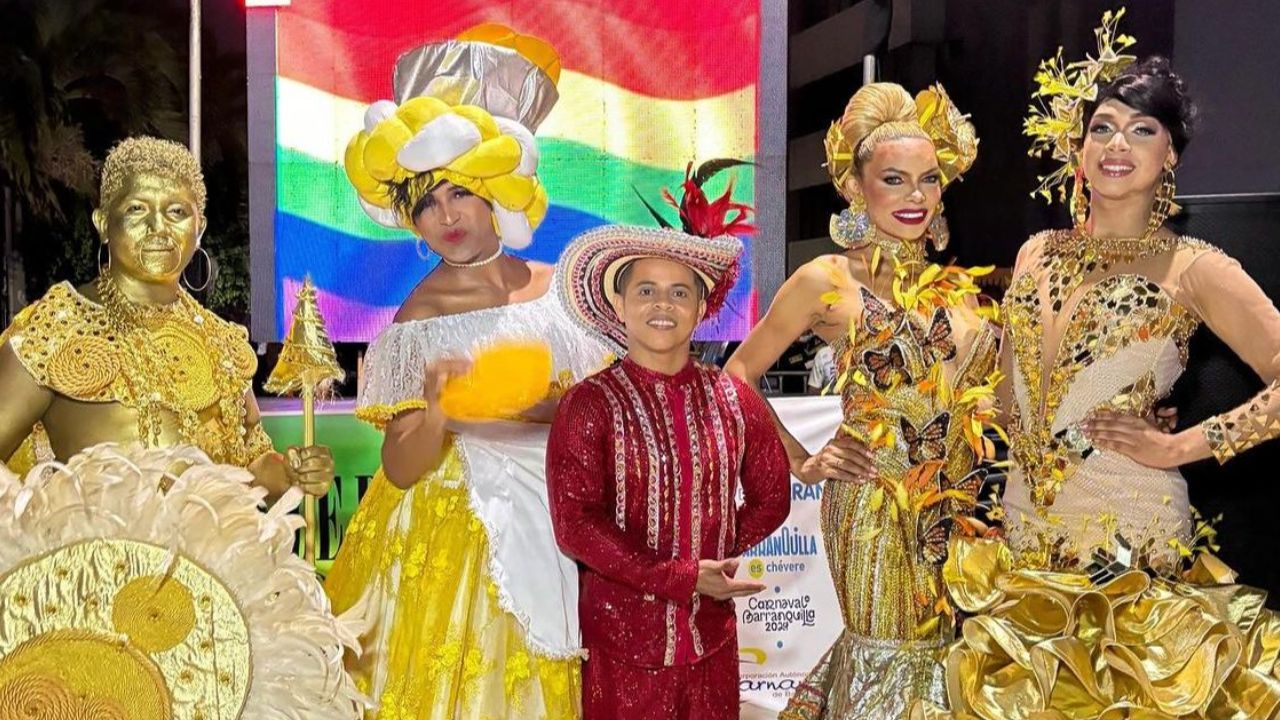
© Carnaval Gay