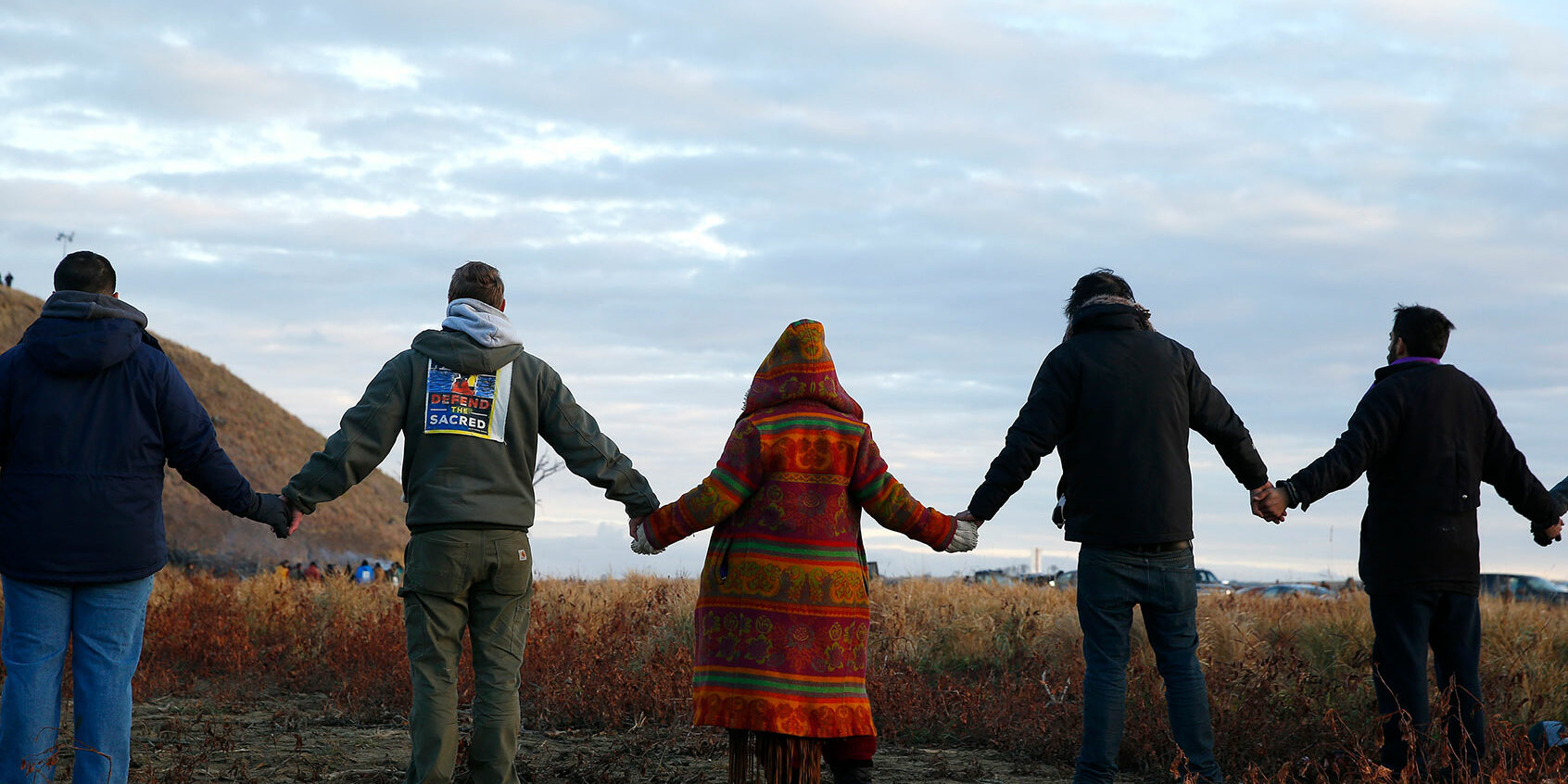
How many times have you (or someone you care about) walked in the street holding hands with a partner of the same sex, and felt insecure about people’s reactions? Perhaps total strangers glared at you, name-called, verbally abused or threatened you, or even physically attacked you?
It’s undoubtedly one of the simplest human gestures of companionship. Still, many same-sex couples feel uneasy about doing it, even in relatively freer contexts, where legal equality has been won.
A hand-holding flash mob could be a great way to raise awareness of these issues, which are affecting many people’s lives.
It could also be a smart alternative to either a kiss-in or a free hugs event, especially in contexts where people could face hostile public reactions, violence, or state repression, or risk imprisonment if they were to organise something more confrontational.
More low-key, but perhaps for that even more powerful, a hand-holding flash mob could attract greater public (and media) sympathy for the struggle of LGBTI communities to express their love, friendship, and solidarity with one another.
Case study from Austria

Still from teaser video to promote hand-holding flashmobs on May 17, 2013.
On May 17, 2013, an Austrian network of LGBTI allies joined the Global Call to form a Global Rainbow Flashmob to mark the Day. Members of the Green Party Youth section called for joint hand-holding flash mobs to be held across the country, and encouraged environmental activists, LGBTI community groups, and the public in general to participate.
In the lead up to the Day they created this great teaser video which features different young LGBTI people explaining why they are organising, and calling on others to join and spread the word. On IDAHOT Day, actions took place in seven different cities (Vienna, Graz, Dornbirn, Kufstein, Salzburg, Wels and Baden), and the initiative was picked up by Austrian and international media.
To make it a flash mob, all you need to do is to have one couple holding hands, in the middle of the street, who are then joined by more and more couples, until you have a big group couples. It is important to record or livestream the action, and distribute leaflets, stickers or print-outs to further raise awareness about LGBTI issues.
This could also work well in the form of a march, with various couples all walking together from one meeting point to another. Even with just a handful of couples, you could easily draw people’s attention, and the photos would work well to share on social media.
With six couples (or more), you could also organise couples to participate dressed in a particular colour of the Pride flag (red, orange, yellow, green, blue, and violet), which could also make for great visual results.
Or, how about a human chain or collective ‘hug’?

Collective ‘Hug’ for IDAHOT 2014 in Vicenza, Italy (see cover image). Organised by Arcigay Vicenza
That’s what a network of Italian LGBTI activists, allies, and friends decided to do for IDAHOT 2014, with great visual results and a strong symbolic stance for the reclaiming of public spaces for free expression of LGBTI rights, companionship, and solidarity!
Organised by the local youth section of Arcigay, the city of Vicenza in Northern Italy hosted a big “hug” against homophobia, biphobia, and transphobia on May 17. More than 500 people gathered to “hug” the Palladian Basilica, a UNESCO World Heritage Site, by holding hands around it, in the form of a human chain.
This is a low-cost action with community solidarity, visibility, and well-being at its heart. All you need are folks in the city and a place of choice to hug!
Human chain against violence
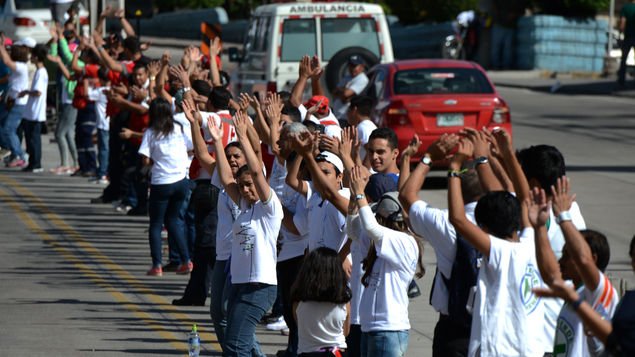
We can also draw inspiration from Honduran activists protesting rising violence in our fight to end anti-LGBTI hate.
In the face of rising violence, including two recent murders of local land rights activists, tens of thousands across Honduras formed human chains on Sunday in a symbolic call for peace. Around 40,000 Hondurans participated in the actions, which took place in the capital of Tegucigalpa as well as scores of other cities.
The human chains were organized by 30 human rights groups, including the Honduras Towns Association and the “Say Yes to Life” movement, which denounced the alarming rate of 14 homicides per day and forced displacement of tens of thousands fleeing violence.
“The human chain is a peaceful demonstration, focused on citizenship, on all the Hondurans who have experienced the pain of violence in various ways,” organizer Nery Cerrato told the EFE news agency. “Honduran society does not deserve to be stigmatized as the most violent country in the world.”