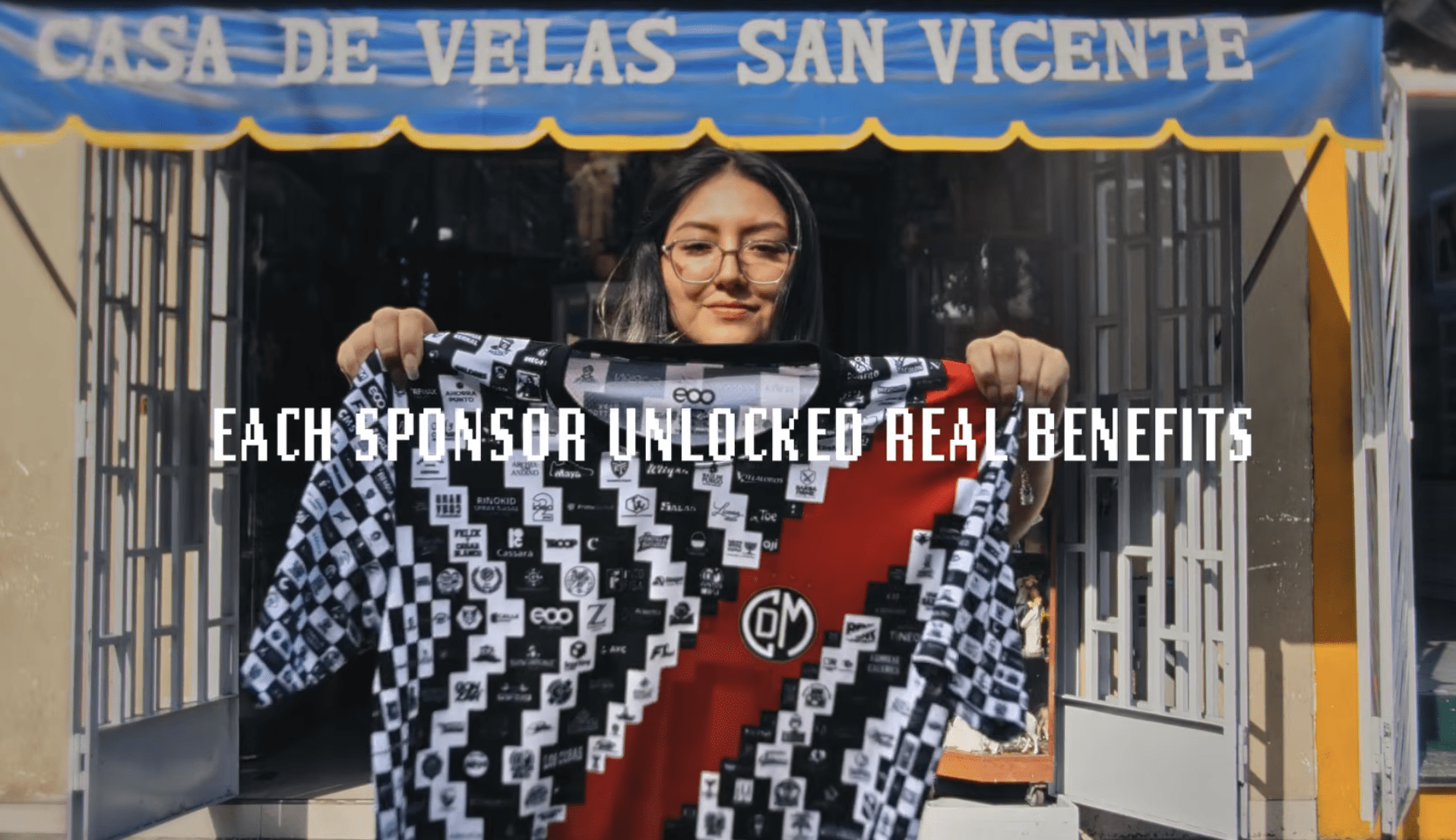
Deportivo Municipal of Lima launched the award-winning “The Thousand Sponsors of Muni” campaign. Facing a financial crisis and missing a main corporate sponsor, the historic Peruvian club turned its jersey into a crowd-funded mosaic, selling 1,000 micro-advertising slots to local small businesses and fans for roughly $60 each.
How the Campaign Worked
- Pixelated Grid Design: The club redesigned its iconic jersey with a dense, pixel-style black-and-white grid beneath its traditional diagonal red sash to house 1,000 tiny sponsor logos.
- Low-Cost Micro-Sponsorship: Local entrepreneurs and fans paid a small fee to secure a spot, democratizing team sponsorship.
- Value for Sponsors: In addition to logo placement on the official kit, sponsors gained rights as official club merchandise retailers and received royalty-free access to players for their own business promotions.
-
Massive Success: The slots sold out in three months, raising over $70,000 USD to keep the team operating, later winning the prestigious Grand Prix at Cannes Lions.
What’s in it for LGBTQI+ campaigning?
Featuring sponsors is obviously nothing new for LGBTQI+ campaigners, especially Pride March organisers. But turning this sponsorship into a permanent marker is a different story. The “LGBTQI+ Friendly” sticker (often a mere Rainbow Flag) is a nice token of support, but also is a Free marketing bonus for businesses who often don’t provide any form of actual support. In many places, a “LGBTQI owned” sticker comes in addition, but again this does not entail any particular type of support. Creating a logo that actually means that the business is providing funding could be an interesting idea to develop.